“THE SECRET KINGDOMS”: ON PAPER, BOOKSHOPS & READERS
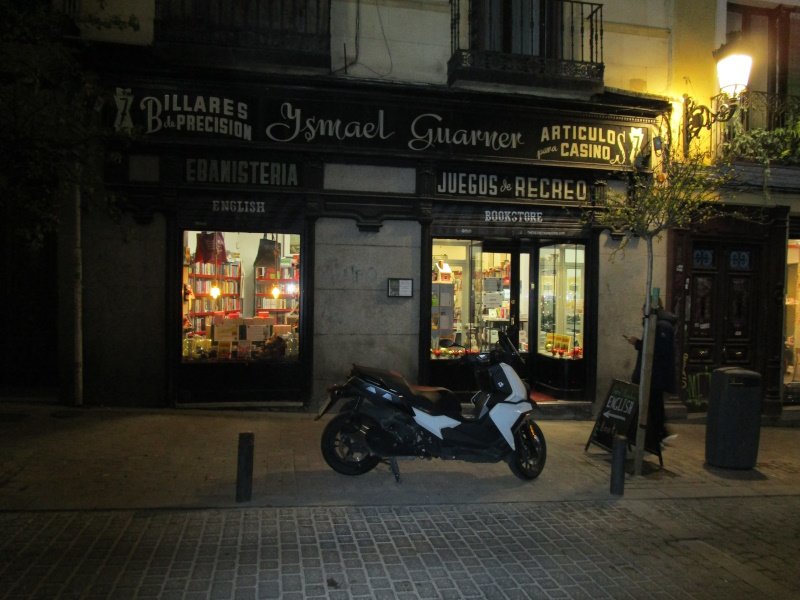
The aroma of fresh print on paper, which we once took for granted, has become an occasional pleasure today. Enter The Secret Kingdoms, and the door swings open under the founder’s early 1900s shop-sign to access 20,000 English-language books arranged on sturdy metal shelf-units and desks. At the front Gen Y can browse through an eclectic cocktail of fiction-sagas, poetry, sci-fi, eco-essays and politics, that fizzy mix which is helping to revive independent bookshops around Europe. Deeper into the shop, where freshly arrived books are unboxed, the aroma of print on paper fills the air. Foodie volumes may not catch your eye at first, but two dozen or so line a small waist-high shelf-unit.
This hand-curated approach, with the books on display shuffled almost every day, explains how the shop, “run for love not money” as co-founder David Price puts it, keeps its finger on Madrid’s cultural pulse.
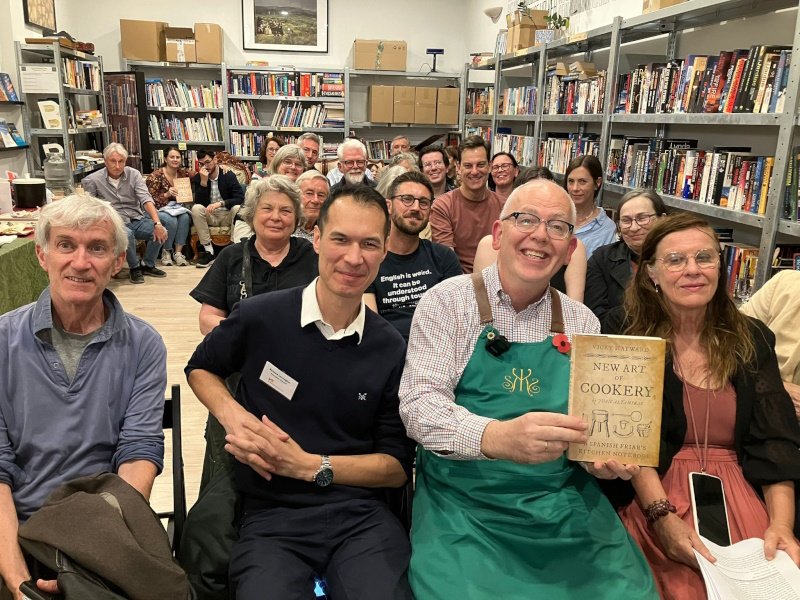
When David and his wife Bea invited me to celebrate the paperback debut of New Art, we worked up a hedgehopping dialogue presentation with everyday 18th-century flavours threaded through the interview. As the British Spanish Society came on board as co-hosts, the audience grew to a sparky full house of English, Americans and Spaniards, a mix of young academics, the odd historian, home cooks, and the founders of a history book-club.
Their shared afición for history and food allowed us to dig into whys and wherefores: why, for example, a historic culinary culture apparently “belonging” to place may have been attached to a wider scenario of networks, now invisible; where and how Morisco food culture has left a deep imprint in early modern Spain; and how narrated history can use archives and texts to explore unwritten food culture. We also touched on “a serious problem”, as the great social historian Peter Burke has called the habit of branding recent and evolving culture as subsumed in “traditional” – in this case, in food culture. We also found time to highlight the exceptional social impact of Spain’s chef community, among whom seven creative figures appear in my book.
The audience wanted to know more: for example, of the divide between friary and monastic cookery across the centuries by the friars’ focus on cooking for the hungry. One remark went to the everyday heart of the matter: can one learn to cook from this new edition of the book? My answer was, yes.
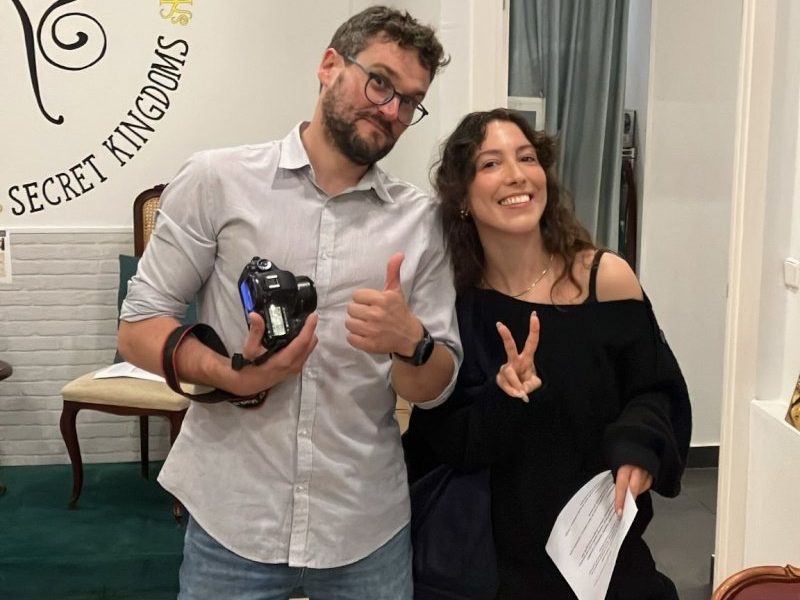
My thanks for the invitation to present the book go to David and Bea for their inspired and expert production of the small-gig format, and to Richard Lewington of the British Spanish Society, whose opening words paid timely homage to peaceful cross-frontier culture.
© Vicky Hayward, 2025
❖ If you’d like to read this text in Español, just click on this link!
The audience’s curiosity allowed us to dig into whys and wherefores: why a historic food system «belonging» to place may in reality have been shaped by wider networks, now invisible, and where the distinctions sit between historic narrative and narrated history.”