SPANISH VERJUICE OR AGRAZ: SPARKS OF ACIDITY

Exactly when or how early modern Spanish Christian cooks rediscovered al-Andalús’s liquid or dried agraz made with sour grapejuice we do not know.
Medieval Navarrese fermented verjuice pressed from acid Garnacha grapes enjoyed a heyday, but it seems to have been over by early modern times for by the early 16th century Mestre Robert (Roberto de Nola) was proposing only fresh drinking juice with basil while his contemporary Alonso de Herrera, author of a classic farming manual, recommended cooking with salted rather than fermented verjuice “where no oranges grow, nor could ever grow easily”.
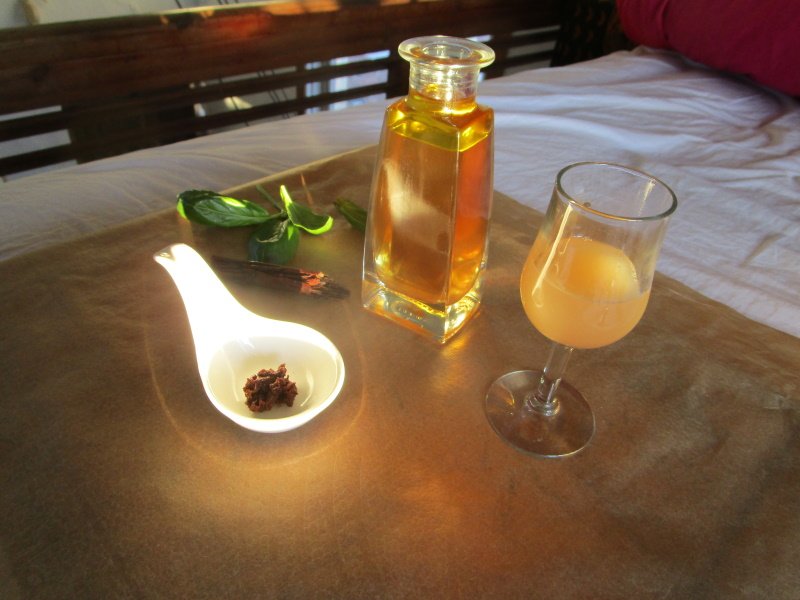
The sour oranges of al-Andalús continued to be popular in Christian kitchens, but not sundried verjuice, perhaps because everyday popular techniques for making it were not recorded. Mentioning it in a 13th-century recipe book, Ibn Razīn a-Tuğībī had assumed nobody needed a recipe, and it was only in 1611 that one went into print in Spanish. Martinez Montiño, the Hapsburg’s longest-standing palace cook, took “well grown and very green” grapes, then pressed, bottled and decanted the very cloudy juice, which slowly gives a crystalline liquid ready either to seal under olive oil or to sun-dry to a solid paste similar to classical Greek omphacium. Once the paste was hard – this would not take long in the dry summer heat of the meseta – he would grind it, moler, to give small grains he kept in a box; and “when you want to use some”, he advised, “you will dissolve it in a little water, or broth from the pot ….”
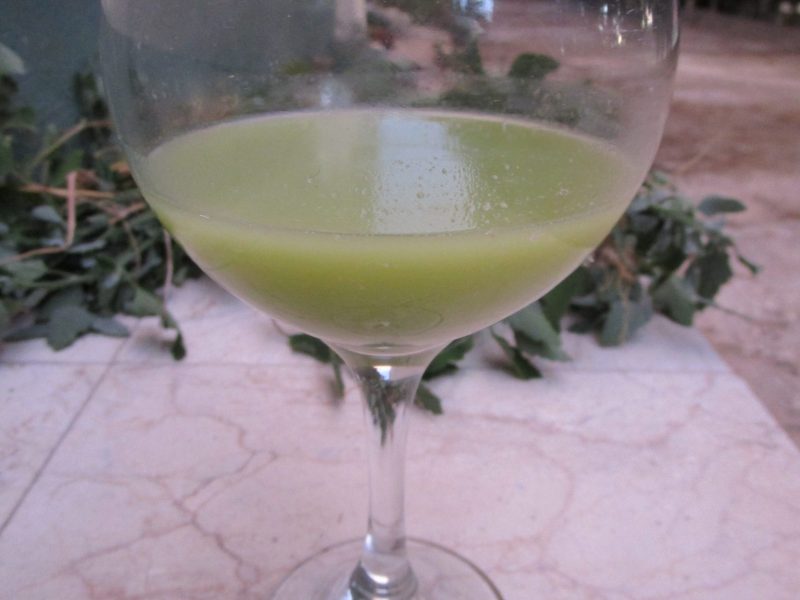
Unlike the French 14th-century cook Taillevent, author of Le Viandier, Montiños used his verjuice sparingly and Altamiras specified grains for even fewer fiesta dishes like Carnival baked ham slices and roast lamb’s head though he called for agrio of one kind or another in chicken pepitoria, braised duck, poached trout, and salt cod. Altamiras probably used Montiños’s recipe, which is easy to recreate using a gentle slow home-juicer. Old-fashioned grapes full of flavour, semi-ripened by midsummer, do give a very green juice with solids that sediment during a month to leave a crystalline golden liquid ready for decanting and, if you like, drying.
Along the way, I asked myself, is such effort worthwhile? Four months later, with a very small jarful of paste and a few small glass flasks of agraz to show for patient work, I would resoundingly say yes, not only for the pleasure of recovering a distinctive lost product and flavour, but also because both liquid fresh agraz’s fruitiness and its dried pure acidity are unique, sparking alive any dish you make with them.
❖ If you’d like to read this text in Español, just click on this link!
❖ The Recipe at a Glance: Verjuice or Agraz: Sparks of Acidity
Press acidic green grapes, leave the juice to sediment and then decant and cork the clear liquid as fresh bottled verjuice (agraz), or ferment it, or sun-dry it to grains or a paste.


Juan Altamiras flavoured a few fiesta dishes in New Art, for example baked ham slices and roast lamb’s head, with dried and powdered verjuice.”