Vicky Hayward

NEW ART of COOKERY

by Juan Altamiras

  • Book
  • The author
  • Videos
  • CHEFS
  • News
  • PHOTOGALLERIES
  • RADIO &c.
  • RECIPES
  • Reviews
  • Thanks &
    AI NOTICE
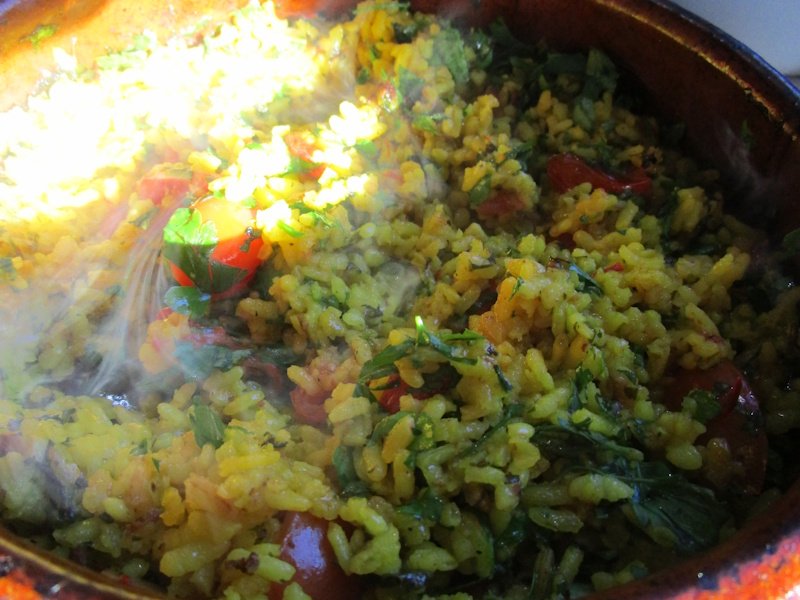
Bomba rice, an absorbent round variety cooked here with fish broth, tomatoes and saffron.

RICE AND BEANS: EVERYDAY WISDOM

Rice cooked with kitchen-garden greens in saffroned fish broth.
Rice, everyday wisdom: rice varieties, like Bomba or Bombón, which absorb up to four times their volume in water, are ideal for dishes with a flavoured cooking liquid, like the saffron and fish broth in this recipe. ©Vicky Hayward

How many new ideas would you expect to find for beans and rice in Altamiras’s recipes?

Few, you might think, given rice’s long-valued place in medieval court cookery and dried beans’ everyday use as  a basic of popular kitchens well before the arrival of New World haricots (Phaseolus vulgaris). But Altamiras paid beans unusual gastronomic attention and he knew unusual popular local rice dishes to add to the court repertoire.

In the autumn he probably cooked home-grown and certainly new-season pochas, then, later in the winter, dried haricots. Those from the Río Grio, where the friars collected their alms, were famed for their quality thanks to the pure snow-water irrigation of the kitchen-gardens along the river. Either way, he did not soak his beans, simply blanched them first, a technique designed to avoid fermentation during the soaking and so make them more digestible. This method still works well if you use spring or mineral water and you are cooking beans with under a year of dried shelf-life. All the flavourings Altamiras added at the end of cooking time, with plenty of variants for different days of the week and seasons: an onion sofrito with peppermint and saffron, or handfuls of fresh parsley and peppermint with olive oil, or breadcrumbs and grated cheese, in all cases with salt at the end.

For rice his new ideas were probably Morisco influenced and from the inland growing areas: for example, he fried his grains in olive oil with saffron then added cooking liquid and a little flaked fish and tomatoes to give a dry rice given the legendary picturesque name Arroz a la Caputxina in La Cuynera Catalana (1835). Most intriguingly of all he gave the rice a thin golden grilled crust, almost in the Persian tahchin style, adapted from medieval “gilded” dishes: this he could deliver at no cost thanks to plentiful eggs from the friary hen-house.

All these dishes are more than accompaniments, patient and easygoing: they can take first place before other dishes, as in Spanish meals today, or, as on Lenten days in the friaries, they make a whole meal, which you can follow with a salad.

Vicky Hayward

❖ If you’d like to read this text in Español, just click on this link!

❖ Rice and Beans: Everyday Wisdom

Many apparently simple everyday dishes pivot on key techniques.
Sweat rice in garlicky warmed olive oil (evoo) with saffron, pepper and parsley, add measured water for absorption, perhaps fish or tomato, and if you like pour egg on the rice for a golden crust.
Blanche and slowly simmer unsoaked dried haricot beans then, once they are cooked, flavour them with onion sofrito or cheese and breadcrumbs.

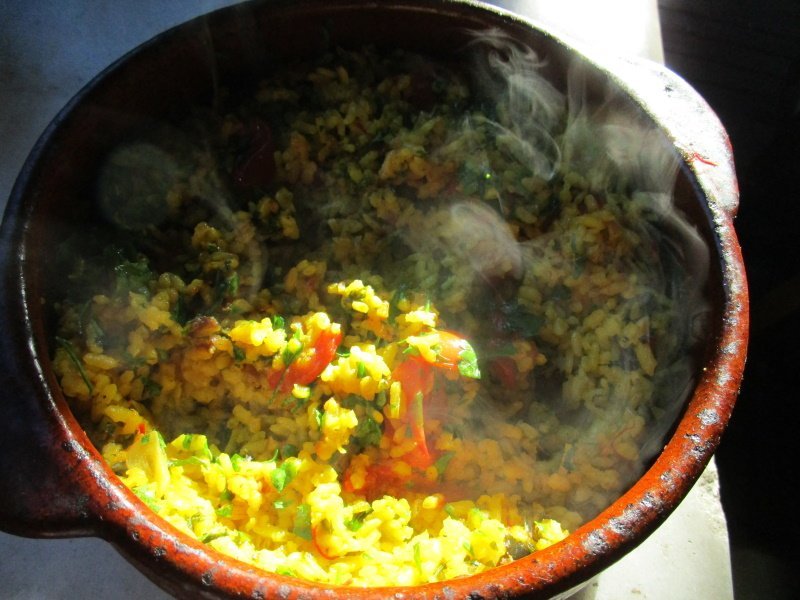
A dry rice at the end of cooking time, showing the steam it absorbs while resting under a cloth or newspaper.
A dry rice (arroz seco) is usually left to rest for 5-10 minutes to absorb loose moisture, for example in the steam, while a cloth or newspaper covering absorbs excess damp. At the same time the saffron flavor keeps developing. (photo © Vicky Hayward)
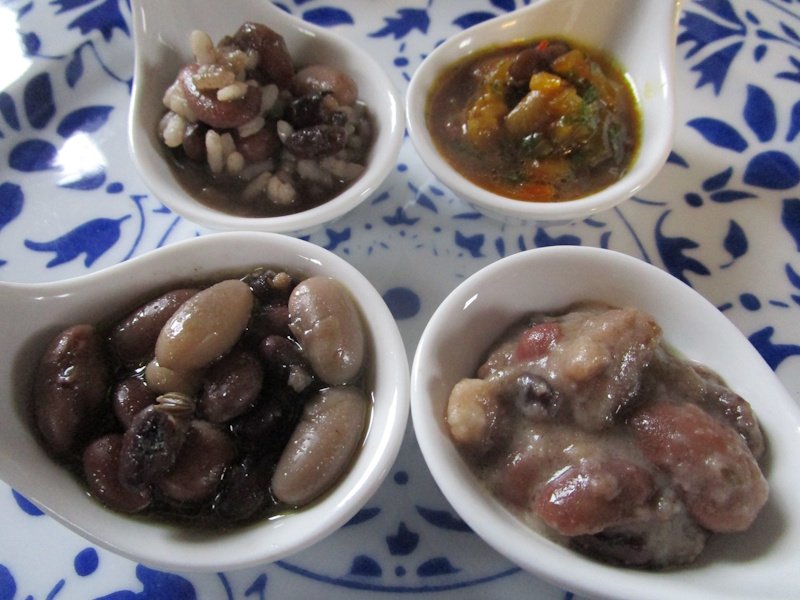
Tasting spoonfuls of flavoured beans: (clockwise from top left) with rice, with sofrito, with cheese and breadcrumbs, or just with garlic.
A tasting of Altamiras’s bean flavourings (clockwise, from top left): beans with rice; beans with sofrito; beans with cheese and breadcrumbs; and plain beans with garlic. (© photo Vicky Hayward)
A dry rice at the end of cooking time, showing the steam it absorbs while resting under a cloth or newspaper.
A dry rice (arroz seco) is usually left to rest for 5-10 minutes to absorb loose moisture, for example in the steam, while a cloth or newspaper covering absorbs excess damp. At the same time the saffron flavor keeps developing. (photo © Vicky Hayward)
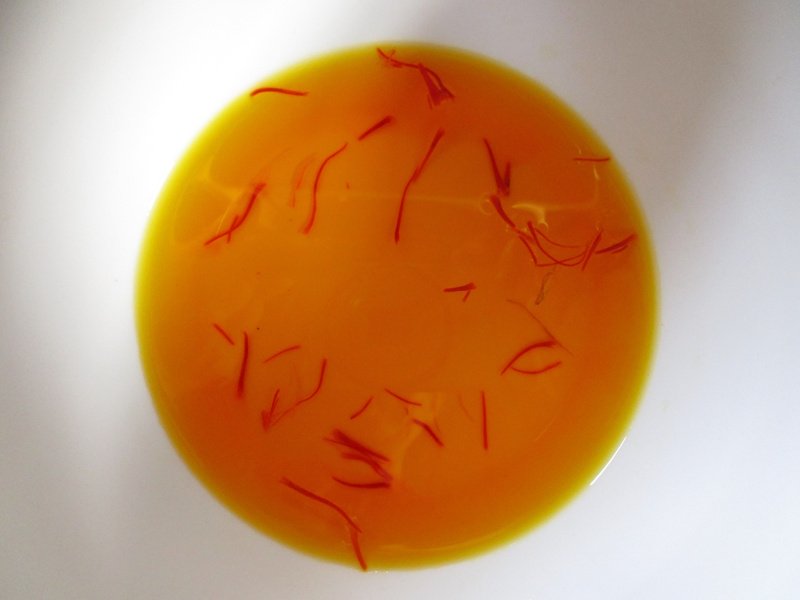
Saffron threads soaked for two days, ready to add to rice with the soaking water.
Soak saffron, preferably organic, in water for 24 hours, but for full colour and flavour leave to soak for several days. Add to the rice near the end of cooking time. (© photo Vicky Hayward)
Flavors // chicken, sweet ripe baby tomatoes, fat-and-lean cured ham, soft lard (home-made if possible), fresh herbs


Altamiras gave unusual creative attention to dried haricot beans, cropped from his friary kitchen-garden, and he shared original rice dishes from the popular repertoire.”

MORE RECIPES >

Summary
Recipe Name
RICE AND BEANS: EVERYDAY WISDOM
Published On
2023-02-24

VISIT THE WEBSITE FOR THE SPANISH EDITION ▸


The author has received no subsidies or grants or payments in the UK or Spain to fund her research, writing, the publication of this book or the videos shown on this website.

THE AUTHOR OF THE BOOK, ITS GUEST COOKS, PUBLISHERS AND COLLABORATORS, AND THIS WEBSITE HAVE NO ASSOCIATIONS WITH SPONSORED AND PRIVATE ARAGONESE COMMERCIAL VIDEOS, ADVERTORIAL, WEBS AND PODCASTS ADVERTISING ARAGONESE PRODUCTS, CLIENTS AND TOURISM .

© 2017-2026 BUILT AND ENGINEERED BY IRONBACK SOFTWARE. DESIGN BY JUANJO TEJADO IN COLLABORATION WITH VICKY HAYWARD. The book's contents are registered UNDER THE LPI C. 2007, 2010, 2014. BOOK C. 2017. ALL WRITING & PHOTOGRAPHY BY VICKY HAYWARD © 2017-2026, UNLESS CREDITED VIA PERMISSIONS.

CONTACT | Privacy and Cookie Policy.

You can find me on: www.vickyhayward.es or

// For all licensing requests for book and website please contact my agents
www.andrewnurnberg.com

Cookies used by Vicky Hayward and www.newartofcookery.com are designed to enhance visitors' experience, but they do not collect personal data; please click on the "Privacy and Cookie Policy" button for more information.