ALTAMIRAS IN MADRID: AN UNKNOWN CHAPTER OF HIS LIFE
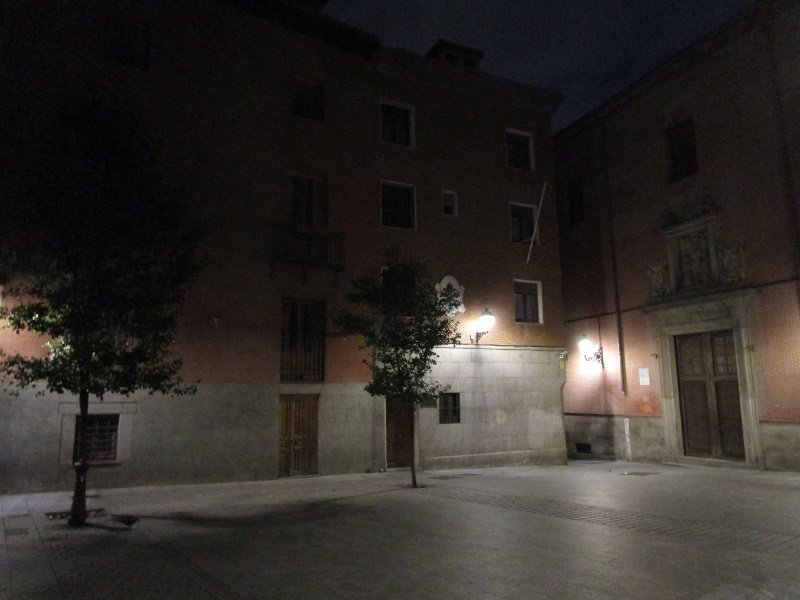
We cannot follow Altamiras’s footsteps easily in Madrid. The Franciscan friary, which he must have known, was soon to be rebuilt, and its archives later destroyed by José Napoleon, while the Royal Palace, including the kitchens and new nearby library, were still under construction after a fire burned down the Hapsburgs’ Alcázar in 1735.
But in any case Altamiras seems to have wanted to move discreetly in Madrid. Writing under a pen-name reflected friary humility, in part, but also the radical nature of his book. Anonymity was the safe position.
For that reason, perhaps, we do not know how long he spent in the city, whether just a few months or years, like other Franciscans who were invited to share their skills in patrons’ homes. We do, however, have clues to help us understand how his book came to be published in Madrid.
Spain’s capital was a small world in 1745, its cultural life carefully curated by the first Bourbon king, Felipe V, who relied on imported French palace servants in his domestic life and on liberal Spanish nobility for his programme of political and social reforms. Altamiras was in the right place at the right time. His home town, La Almunia, had backed Felipe in the War of the Spanish Succession (1702-13) which brought him to the throne, while aristocratic families and intellectuals from Aragon who had moved to self-imposed exile in Italian cities under Spanish control during the war picked up considerable string-pulling power as they slowly regrouped on home ground.
Among them was Joaquin de Pignatelli, a teenager from an eminent Zaragoza family. In 1741, aged only 17, Joaquín wed María Luisa, the daughter of Felipe V’s High Steward, the Duke of Mirandola. It seems to have been a love marriage of shared tastes; both had lived in Italy at different moments. As High Steward, María Luisa’s father hired the palace’s kitchen staff so almost certainly he asked Francisco Ardit, one of the court’s few Spanish cooks, to write the brief “Approval” to open New Art. Luck was with Altamiras. He was now set up to seek Inquisition permission and a licence to print.
Altamiras may even have cooked for the young Pignatellis, who were noted Franciscan patrons. Others may have helped him for different reasons. Blas de Antonio Nassarre, director of the Royal Library, had hired as treasurer Ignacio de Luzán, a Zaragoza-born poet who tangled with the Jesuit-run Inquisition when he tried to publish in his home city. He seems a likely candidate for advisor, who suggested Altamiras publish in Madrid, guided him through the permissions process and joined Nassarre and Pignatelli in raising the finance for the book.
Unusually no patron is mentioned on the frontispiece. Since Altamiras was supported by powerful palace insiders, is it possible that Felipe V was involved? He had announced early in his reign that he wanted to “put limits on excessive expenses in every area as far as decency allows, beginning in my own house, so that everybody follows this example….” Yet he liked French cooking and relaxed eating in his private chambers. Altamiras’s book, however, his friends may have realised, delivered for kitchens in both wealthy and everyday Spanish homes.
Within these perspectives, then, in Madrid Altamiras’s slowly nurtured friary cookery connected with wider European reformist ideas and Enlightenment tastes. His refusal of extravagance, his rural influences, his social criticism and jokes might seem risqué for decision-making conservatives in Zaragoza, but in Madrid, where the reformists held power, he could share his food culture with no fear. Here his food was relished, his book raised a knowing smile, won its license to publish, and the funds for printing.
Here too, sold at the western corner of the Puerta del Sol, where the bookshops clustered, it became an unexpected best-seller.
❖ If you’d like to read this text in Español, just click on this link!
© Vicky Hayward
Within these perspectives, then, Altamiras’s friary cookery, slowly nurtured and untied to fashions of the time, connected in Madrid with reformist ideas and Enlightenment tastes. ”