SALT-TUNA SALPICÓN

In the eighteenth century Spain was famed for its big cities’ supplies of fresh sea-fish like tuna and red bream yet people with modest incomes, including the friars, rarely afforded more than salted sardines and herrings to eat raw or grilled with bread, more occasionally varied by a little expensive cured tuna and salmon for fiestas, and, in summer, sardines sold from large barrels of escabeche.
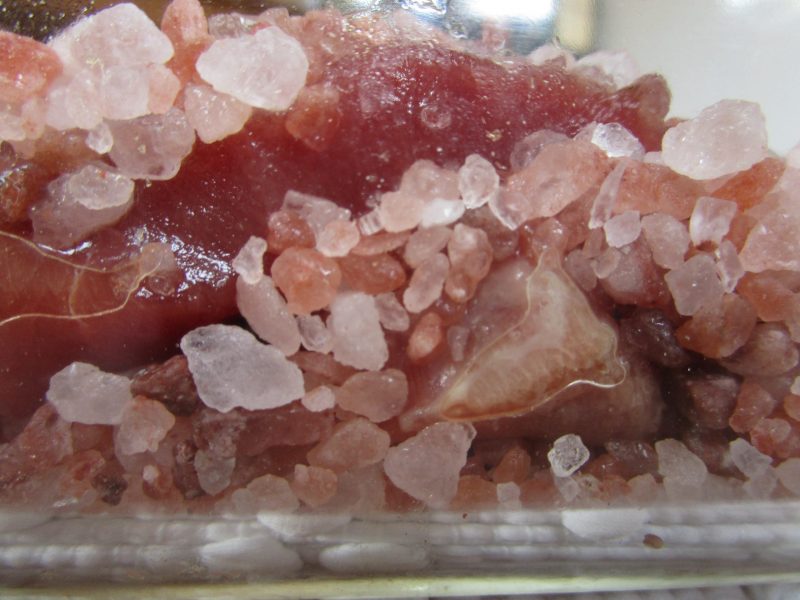
In one Franciscan manuscript Sever de Olot, writing close to the Mediterranean in 1787, revealed how he salted tuna, cutting it into fist-sized pieces, drying it and finally soaking it briefly in fresh cold water before layering it with salt in a covered pot. Today such fish-curing, or salazón, flourishes in today’s Mediterranean food culture, but now as a specialist craft, which has slowly evolved cured fish into delicacies like ijada, the prized fillet, akin to a marine ham. You can enjoy these goumet foods raw, and with them you can also make Altamiras’s two-textured cured tuna salpicón salad dressed with olive oil, vinegar and pepper, plus the dish’s signature rings of raw onion.
While meat salpicón, made with “vaca”, or cow’s meat, more highly valued than beef, won fame in Spanish drama and fiction, appearing in the opening lines of Don Quixote, a cured fish salad was more useful to the friars and modest households. As Joan Bagués, another friary cook, explained it in his 1170s notebook, “per fer un plat de barena o lo sopar, y no tengas peix, pren tonyina”: to make a supper or chopped dish when you have no fresh fish, take cured tuna.
For the book I had the luck of being given a recipe by Valencian tonyiner, Vicent Peris, who sells a wide range of products in the city’s art nouveau market. He urged me to include a recipe for lightly home-cured fresh red tuna, now available all year round thanks to 21st-century tuna-fattening in the Mediterranean, and it gives a spectacular salpicón, with fingers of tuna fillet surrounding dressed, chopped coarser dark flesh. Vicente adds bell peppers and lemon, but I prefer to stick with 18th-century ingredients: the signature onion rings and finely ribboned spinach.
Yet infact, as Altamiras would say, “these dishes are as one”, for any version is a celebration of tuna, an ocean luxury saved from extinction. Yet it remains a dish for a celebration, just as it was for the friars in the 18th century, especially good in hot weather. Good accompaniments are, perhaps, a glass of cava, a chilled soup beforehand – say, white almond and garlic – and a juicy fruit like melon or peaches to follow.
❖ If you’d like to read this text in Español, just click on this link!
❖ The Recipe at a Glance: Salt-Tuna Salpicón
Home-cure fresh red tuna fillet with sea-salt, desalt and knife-chop or slice the cured fish into fingers, dress with olive oil (evoo) and vinegar (wine or other), and top with raw onion rings.


Altamiras dressed his cured tuna salpicón salad with olive oil, vinegar and pepper, plus rings of raw onion, a classic garnish for meat and fish salpicóns.”
