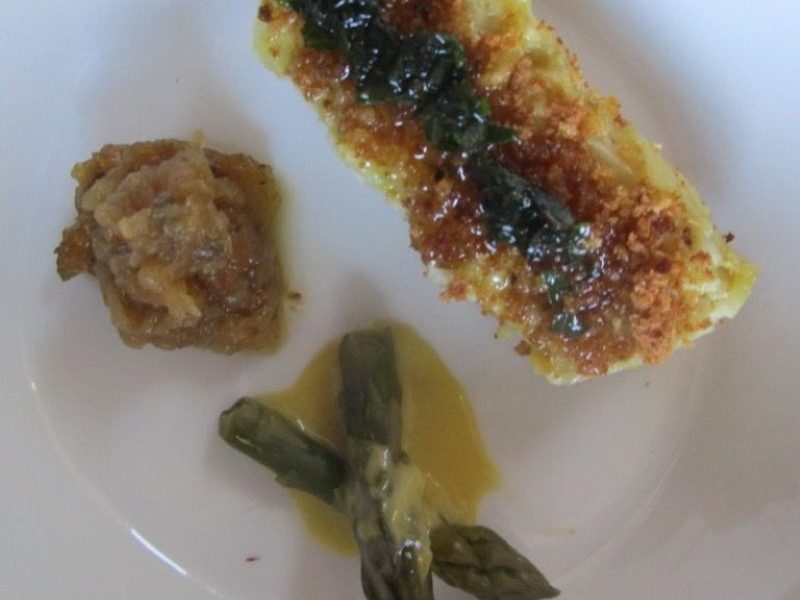
STEAMED CABBAGE CUSTARD

Very often Altamiras seemed to create most happily when working with the strictest larder limitations, for example when searching for flavour for Lenten dishes. His salt-cod recipes are one example, but most notable of all are his dozen or so collations or colaciones, energy-giving vegetable and fruit dishes designed to meet fasting norms but still satisfy the friars’ hunger at dusk.
With these recipes Spanish friary collations reached their culinary highpoint: fasting had relaxed enough to allow inventive combinations, and at the same time, since a Lenten dietary regime still needed to be rigorously respected for over two months a year, a cook like Alamiras was appreciated for coming up with new ideas.
The first recipe he gave was this cabbage timbal, simplified from a recipe by Diego Granado Maldonado, an Italian influenced court cook who brought many of Scappi’s recipes into Spanish in his 1599 Libro del arte de cozina. Only one edition of Granado’s book appeared, but Altamiras must have known it since his bacalao dishes also picked up on its roughly sketched ideas for salted conger.
Today the recipe reads like a modern vegetarian dish well designed for silicon moulds and steamer cooking, which help to keep the finished texture evenly creamy and soft. Individual moulded portions are ideal for a hot meal for one or two, while a larger loaf-shaped mould can be plated with side-bites evoking Altamiras’s fondness for savoury and naturally sweet flavours alongside one another. An onion confit and asparagus spears with lemon sauce, for example, match well with the cabbage timbal and you can serve one of his bowls of greenery alongside each plateful.
❖ If you’d like to read this text in Español, just click on this link!
❖ The Recipe at a Glance: Cabbage Custard
Boiled, finely-shredded cabbage and slow-sweated onion sofrito, fresh herbs and grated cheese are stirred into an egg custard poured into a silicon mould (or two) and steamed or baked in a bain-marie.


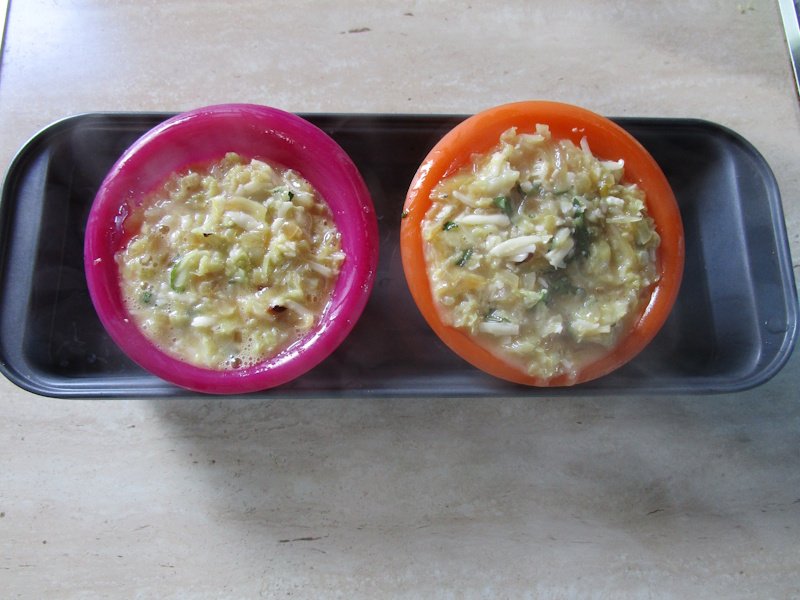
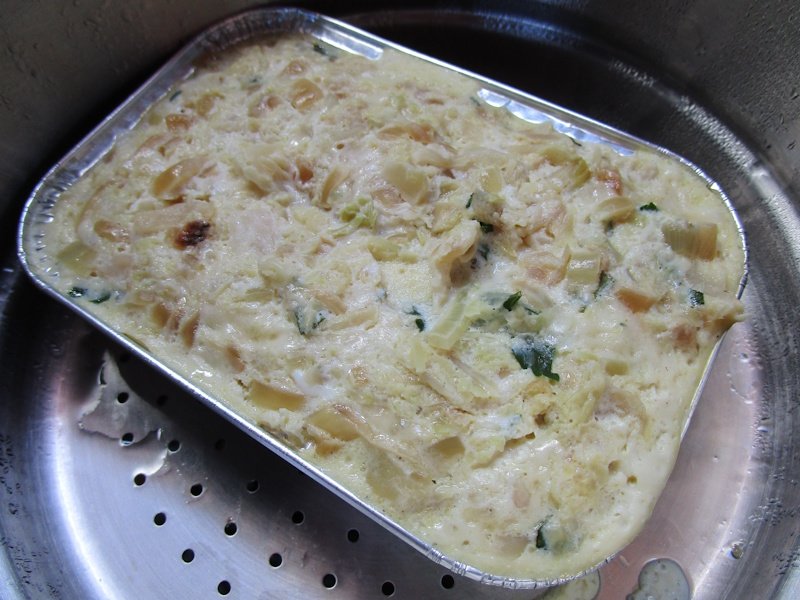
Juan Altamiras’s cabbage custard, designed as an energy-giving dish for Lent, shows his flair for cooking humble everyday ingredients.”