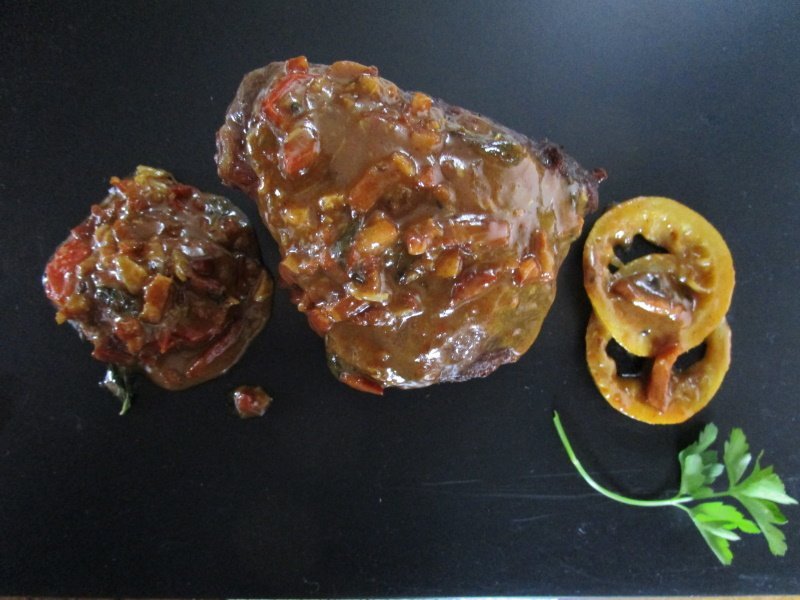
BRAISED BEEF, OX OR CALF CHEEKS

Altamiras seems to have known how to butcher livestock and he was skilled at separating calves’ and oxes’ heads into three different cooking cuts – the tongues, brains and, above all, the cheeks – for roasting in a wood-fired oven. Michel Guérard gave beef cheeks a new popularity in French cuisine in the 1980s and in Spain pig’s cheeks have enjoyed a revival since the 1990s, offering a small cushion of meat ideally sized for one person. Additionally fresh Iberico pork cheeks are fairly reasonably priced. Altamiras doesn’t mention them in his book because he would have salted them along with the rest of the pig, except for the offal.
I wanted to hybridise Altamiras’s recipe with the modernised one which appears in the book, prepared by La de Espronceda in Lavapiés. Chef proprietor Antonio Amago’s main change to the recipe is to braise cheeks in pig’s trotter stock rather than roast them. To that method I reincorporated Altamiras’s sweet and spiced flavours, combining grated apple with a black cardamom infusion and serving the cheeks with a spoonful or two of parsley chickpea potaje and baby onions.
This is the kind of food that’s good on a cold winter’s day, so ideal for American and British kitchens where curiously cheeks are overlooked even though their meat is naturally bone free, and fat free if you want them butchered that way.
❖ If you’d like to read this text in Español, just click on this link!
❖ The Recipe at a Glance: Braised Beef, Ox or Calf Cheeks
Carefully trim all the membranes and gristle from the beef cheeks, seal them on both sides in olive oil (evoo) and braise them slowly in white wine, or braise and roast them with tomatoes and lemon slices.

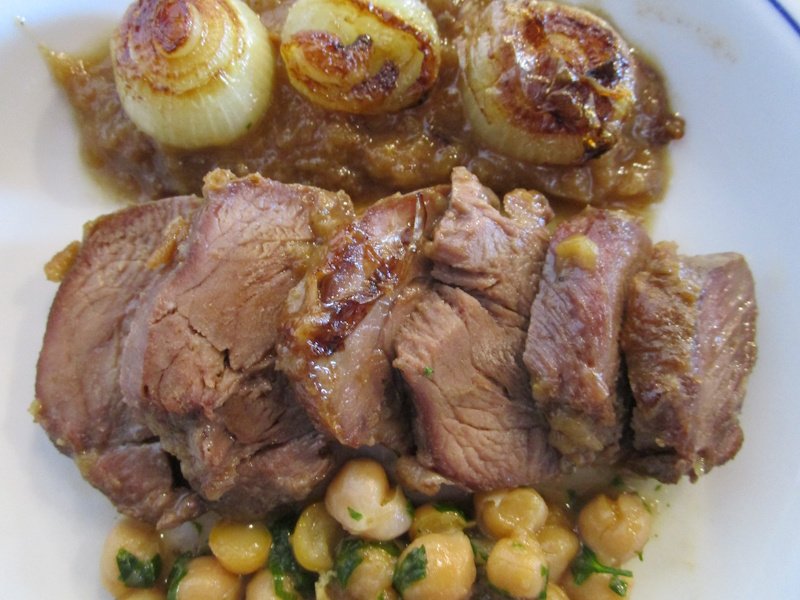
Juan Altamiras butchered his own beef, ox or calf´s cheeks, and slow-roasted or braised them with sweet and spiced flavours.”